A most sought-after Pigment
There are colors that decorate culture, and then there are colors that alter it. Ultramarine — the deep, celestial blue once ground from lapis lazuli — belongs to the latter category. For centuries, it was not merely a pigment but a symbol of power, divinity, commerce, conquest, and artistic ambition. In Renaissance Europe, it was so valuable that contracts specified exactly how much an artist was permitted to use. Some patrons supplied it separately, like jewelry entrusted to a painter’s hand. At times, it was worth more than gold.
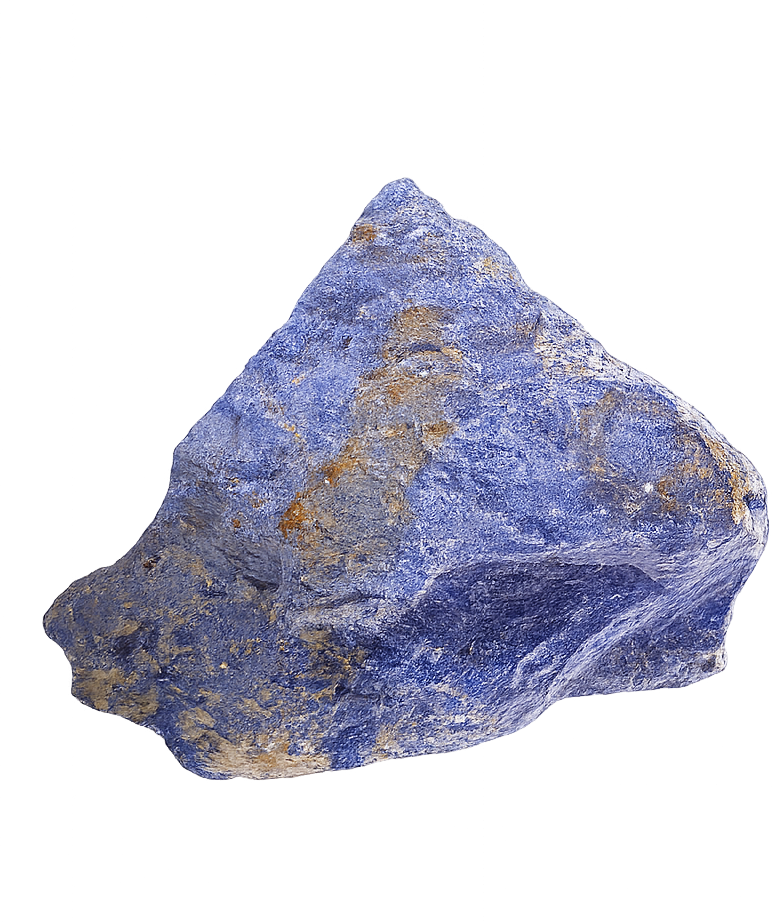
The story of ultramarine is not simply the story of blue. It is the story of desire itself. The pigment’s name comes from the Latin ultramarinus — “beyond the sea.” The phrase described both geography and mystique. The finest lapis lazuli came from the remote Sar-e-Sang mines of what is now Afghanistan, where the stone had been extracted for more than a millennium before European painters discovered its artistic potential. Traders carried the mineral across Asia and through Venetian markets into Europe, where its impossible intensity transformed painting forever. Before ultramarine, blue had always been unstable territory for artists. Ancient civilizations experimented obsessively with methods to capture the color of sky, water, and divinity. The Egyptians engineered what is now called Egyptian Blue, considered the world’s first synthetic pigment. Medieval painters relied on azurite and smalt, both beautiful but temperamental. Ultramarine, however, possessed something almost supernatural: depth without dullness, luminosity without decay. It seemed lit from within. To make true ultramarine was an act of near-alchemy. Raw lapis lazuli contains multiple minerals, many of them gray or white. Artisans crushed the stone, kneaded it into waxes and resins, then repeatedly washed and separated the blue particles from impurities in an elaborate extraction process refined in medieval Venice. The yield was heartbreakingly small. One kilogram of stone could produce only a fraction of usable pigment. Its rarity shaped the visual language of Western art. During the Renaissance, ultramarine became inseparable from sacred painting, especially depictions of the Virgin Mary. Her robes shimmered with imported blue not only to symbolize purity and heaven, but also to advertise the wealth and devotion of the patron commissioning the work. In paintings by Giotto, Fra Angelico, and later Titian, blue became theology rendered in mineral form. No artist understood the emotional power of ultramarine more intensely than Johannes Vermeer.
In works such as Girl with a Pearl Earring and The Milkmaid, Vermeer used the pigment with astonishing boldness. Rather than reserving it sparingly, he layered ultramarine into shadows, walls, and seemingly insignificant passages of light. The blue does not simply sit on the canvas — it vibrates through it. Ironically, ultramarine’s exclusivity may have contributed to the mythology of artistic suffering itself. Historical records suggest artists often negotiated separately for the pigment because using too much could destroy a commission’s profitability. The economics of color shaped aesthetics. Painters diluted ultramarine with white lead, glazed it over cheaper blues, or restricted it to focal points of spiritual intensity. Then came chemistry. In 1824, the French government offered a prize for the invention of a synthetic ultramarine that could rival natural lapis at a lower cost. Two years later, chemists succeeded. “French Ultramarine” Was made using clay, sodium carbonate, sulfur, and silica heated at extreme temperatures. The artificial pigment replicated the color remarkably well at a fraction of the cost. For the first time in history, artists without aristocratic patrons could afford the legendary blue. What had once belonged to popes, merchants, and elite patrons entered ordinary studios, factories, classrooms, and eventually consumer culture itself. The transformation was profound. Blue ceased to be rare, paradoxically, ultramarine never lost its aura. Modern and contemporary artists continued to return to the pigment not simply for its hue but for its metaphysical charge. Yves Klein famously pursued a blue so saturated that it appeared immaterial, resulting in his patented International Klein Blue. The monochromes were less paintings than immersive experiences — fields of infinite blue intended to dissolve the boundary between viewer and void. Decades later, the accidental discovery of YInMn Blue by chemists at Oregon State University reignited public fascination with the search for “the perfect blue.” Today, genuine lapis-derived ultramarine still exists, still expensive, still coveted by conservators, icon painters, and pigment purists. Contemporary artists buy it in grams rather than tubes. The knowledge that the stone originated in ancient Afghan mountains remains inseparable from the experience of the color itself. Even in an age of digital abundance, authenticity carries weight. Perhaps this is why ultramarine continues to fascinate contemporary art. It reminds us that color is never neutral. Pigments contain labor, empire, geology, religion, technology, and trade. They are physical matter embedded with ideology. A tube of paint can hold centuries. In museums today, viewers often stand before Renaissance paintings unaware that the blue before them once traveled farther than most humans of that era ever would. They do not see the caravans, the mines, the merchants, the crushed stone, the contracts, the chemistry. Yet some instinct remains. Ultramarine still stops us. Still slows the eye. Perhaps because true blue has always represented the unreachable — the sky, the sea, the divine, the infinite.
>>> Back to articles