The rise of the democratic art – Art Belongs to Everyone
From Mexican muralism to Banksy’s walls, a persistent, radical idea has shaped modern art: that creativity is not the privilege of the few, but the birthright of all humanity.
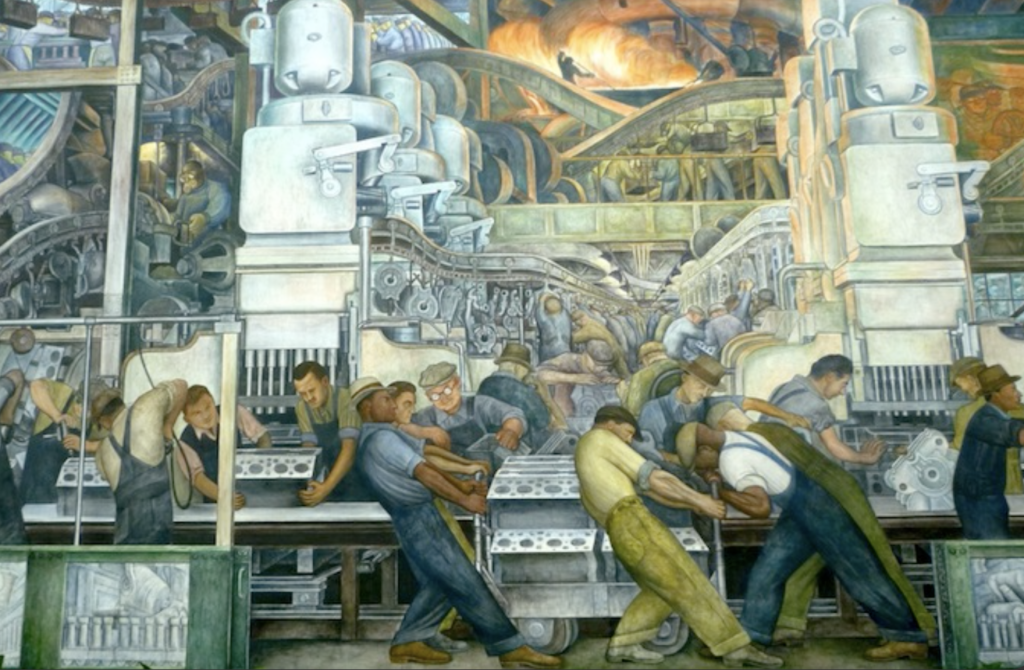
Diego Rivera, Detroit Industry Murals (1932–33), Detroit Institute of Arts. A monumental celebration of the working class as the true protagonists of civilization.
There is a question that haunts every major museum: who is art actually for? The gleaming marble lobbies, the hushed reverence, the admission prices all of it conspires to answer “not you” to a very large proportion of humanity. Yet running beneath the surface of art history is a countercurrent, fierce and stubborn, that insists otherwise. Democratic art is not a style or a movement. It is a philosophy, the conviction that creative expression must speak to, belong to, and emerge from the people at large.
This philosophy has taken wildly different forms across centuries. It has looked like towering frescoes painted on the walls of public buildings in Mexico City. It has looked like a soup can on a canvas in a downtown Manhattan gallery. It has looked like a stenciled rat on a brick wall in Bristol, England. What unites these gestures is a shared refusal: art must not be locked away behind velvet ropes or kept in the hands of aristocrats, institutions, or the market alone.
“The task of the artist is not to interpret for the masses, but to give the masses the means of interpreting for themselves.”
The Birth of an Idea: Ruskin, Morris, and the Arts & Crafts Revolt
The philosophical roots of democratic art reach deep into the nineteenth century. John Ruskin, the great Victorian critic, looked upon the division of labor in industrial Britain and saw not progress, but a catastrophe of the human spirit. When a worker manufactures only a single component of a larger whole, he argued, they are robbed of the complete creative act — and therefore of their humanity. Ruskin’s protégé, William Morris, translated this critique into action.
Morris founded the Arts and Crafts Movement in the 1880s, championing hand-crafted furniture, textiles, and wallpaper made by skilled artisans rather than factory machines. His vision was that beauty should not be the exclusive preserve of the wealthy: “I do not want art for a few,” Morris famously declared, “any more than I want education for a few, or freedom for a few.” He imagined homes where every object — from a chair to a printed page — was made with care and intention, available to ordinary people. That this vision was eventually absorbed by the very luxury market he opposed is one of art history’s bitterest ironies.
William Morris ( 1834–1896 · England) Poet, designer, social activist and political theorist who believed in the democratization of art. whose Arts & Crafts Movement sought to reunite art with everyday life. His Red House (1859) and firm Morris & Co. produced textiles, wallpapers, and furnishings that treated craft as a democratic art form. His book The Wood Beyond the World (1894) also marked him as a pioneer of fantasy literature.
The People’s Walls: Mexican Muralism
If Morris dreamed of democratic art from within the parlors of Britain, the Mexican muralists painted it directly onto the walls of public life. After the Mexican Revolution of 1910, the government of José Vasconcelos commissioned artists to cover the facades of schools, ministries, and markets with monumental works of art. The mission was explicit: in a country with high rates of illiteracy, painting would educate, inspire, and unify a people who had just bled for their freedom.
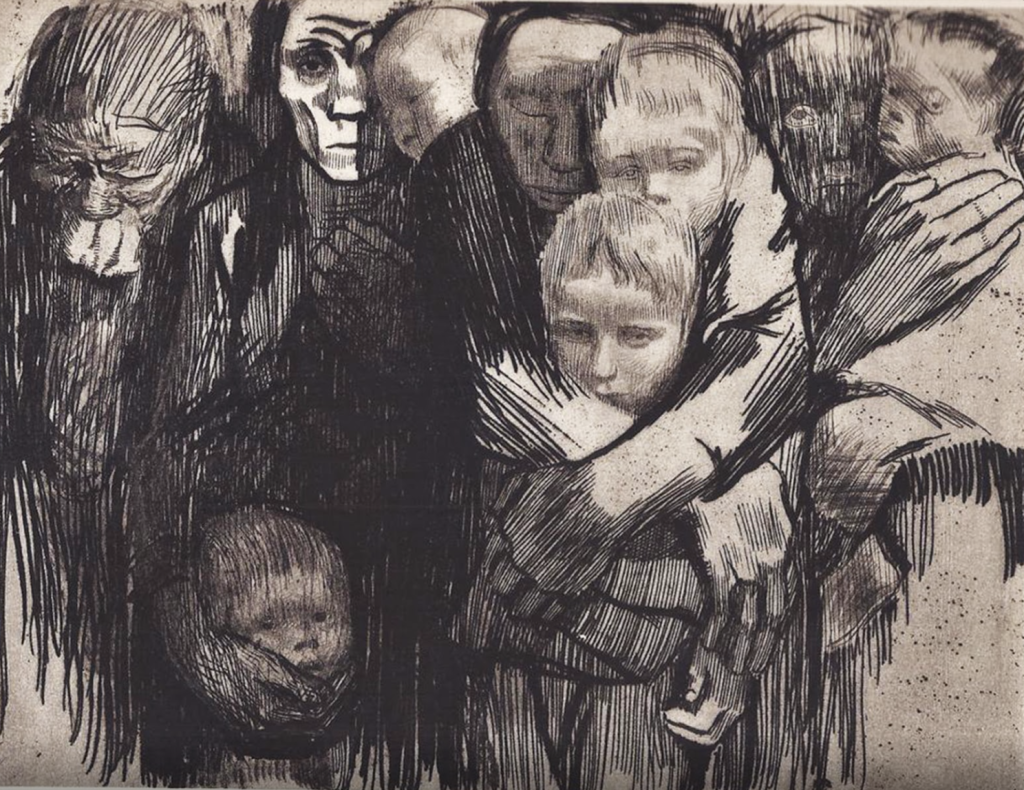
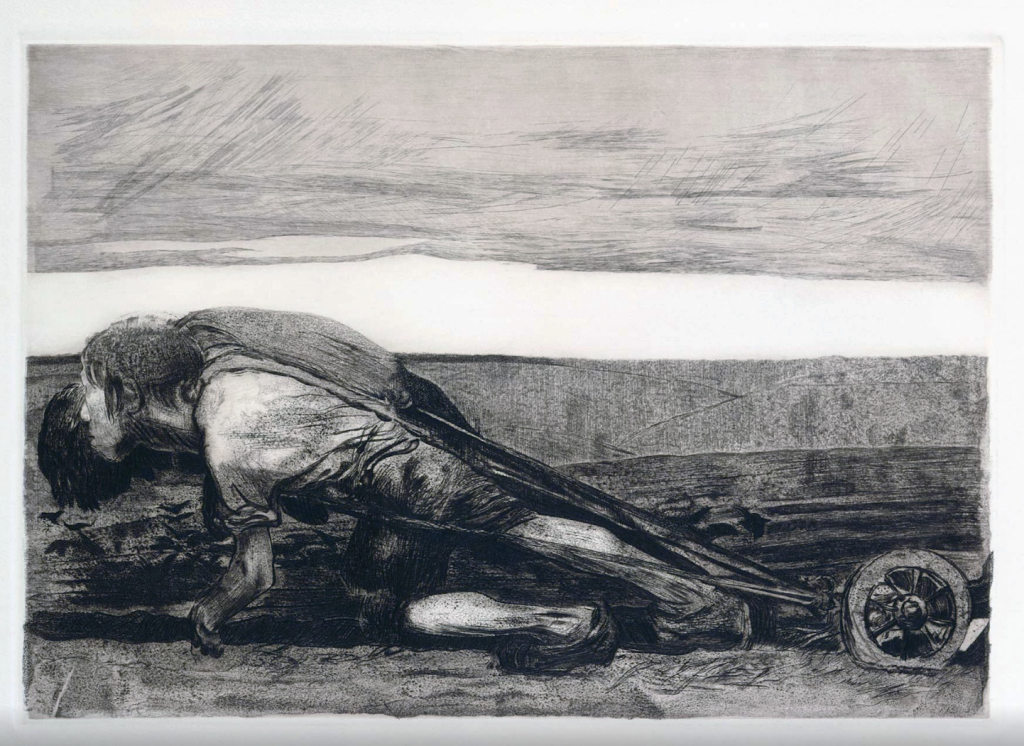
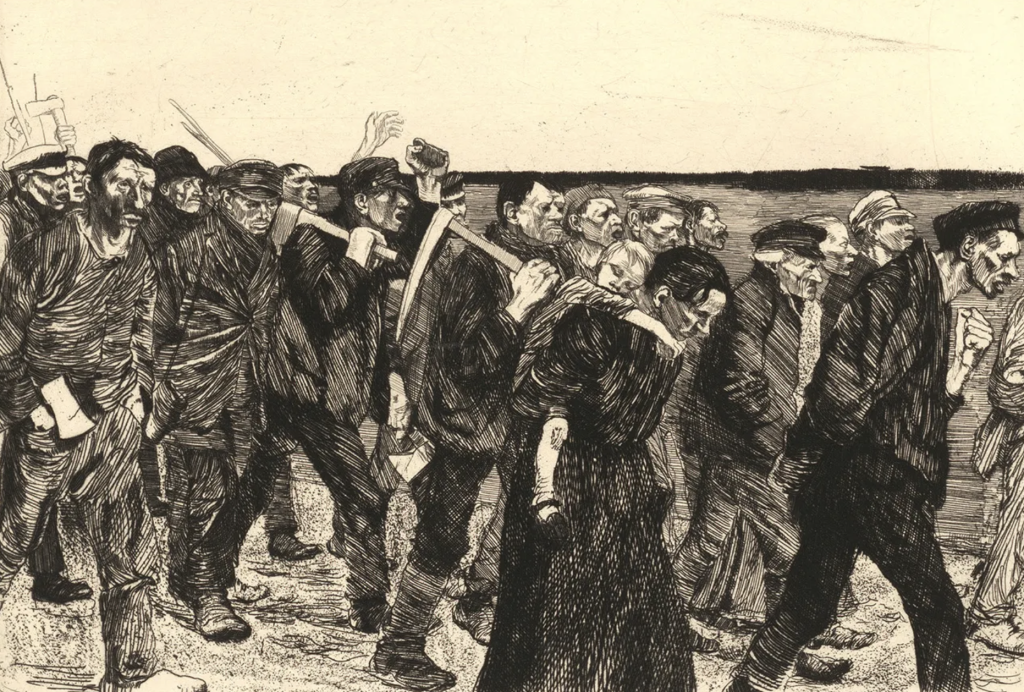
Käthe Kollwitz,
Diego Rivera was the movement’s titan. His Detroit Industry Murals, painted between 1932 and 1933 at the Detroit Institute of Arts, remain among the most ambitious public artworks ever created. Rivera covered all four walls of the museum’s central courtyard with scenes of Ford Motor Company workers — their bodies massive, their labor sacred. He treated the factory floor with the same reverence that Renaissance painters had reserved for the saints. The message was unmistakable: the working person is the true subject of history, and therefore of art.
Diego Rivera (1886–1957 · Mexico) The defining figure of Mexican muralism, Rivera created sweeping historical narratives on public walls that were accessible to all citizens regardless of education. His Man at the Crossroads mural at Rockefeller Center (destroyed in 1934 on orders from Nelson Rockefeller after Rivera included Lenin’s portrait) became one of art history’s most dramatic clashes between democratic art and institutional power.
Alongside Rivera, José Clemente Orozco brought a darker, more tormented vision to muralism’s democratic project. Where Rivera celebrated labor, Orozco mourned its exploitation. His murals at Dartmouth College’s Baker Library — completed in 1934 — traced human civilization from ancient Americas to industrialized modernity with a sorrow that verged on the apocalyptic. And David Alfaro Siqueiros experimented with new materials (car lacquer, spray guns) to bring industrial aesthetics to his politically charged work, insisting that a revolutionary art needed a revolutionary technique.
Grief Made Visible: Käthe Kollwitz and the Art of Empathy
Democratic art is not only about celebrating the people — it is also about making their suffering impossible to ignore. No artist in history has done this with greater moral force than Käthe Kollwitz. Working in Berlin in the late nineteenth and early twentieth centuries, Kollwitz deliberately chose printmaking over painting: woodcuts, etchings, and lithographs could be reproduced, distributed, shared. Art for everyone meant art that could travel.
Her cycles — The Weavers’ Revolt and The Peasants’ War — depicted the German working class not as noble abstractions but as bodies in pain: mothers cradling dead children, men with broken backs, women keening in grief. Kaiser Wilhelm II reportedly blocked her from receiving the Gold Medal of the Berlin Academy of Arts, calling her work “gutter art.” She received the medal anyway, years later, and became the first woman elected to the Prussian Academy of Arts in 1919. The establishment’s discomfort was, of course, the point.
Käthe Kollwitz (1867–1945 · Germany) Germany’s great conscience in visual art, Kollwitz used reproducible print media as a democratic weapon. Her graphic series brought the suffering of the poor and the bereaved into public view, making empathy a political act. Her sculpture Pietà (1937) now stands as Germany’s central memorial to victims of war and tyranny, in the Neue Wache, Berlin.
The Supermarket Shelf as Canvas: Pop Art’s Democratic Provocation
By the 1960s, democratic art took an entirely different turn. Pop Art was, at one level, a joke — and at another level, one of the most radical gestures in art history. When Andy Warhol silkscreened Campbell’s Soup Cans and displayed them in a gallery in 1962, he was doing something philosophically devastating: he was erasing the boundary between high culture and everyday consumer life.
The scandal was not the soup. The scandal was the implicit claim: if mass-produced commercial objects are worthy of artistic attention, then who decides what is worthy? Warhol’s Factory — the name was deliberate — produced art the way goods were manufactured, in multiples, with assistants, at scale. The aura of the unique masterwork, which Walter Benjamin had theorized as the basis of art’s authority, was gleefully destroyed.
The philosopher-provocateur of mass culture, Warhol dissolved the distinction between commercial design and fine art. His screen-printed celebrity portraits and consumer objects asked whether “high art” was a meaningful category at all. His prediction — “In the future, everyone will be world-famous for 15 minutes” — reads now as a prophecy of the social media age.
Roy Lichtenstein was equally subversive, reproducing the visual language of comic strips in monumental oil paintings. These were images that millions of Americans had already encountered, in pulp form, for pennies. By hanging them in galleries, Lichtenstein forced the art world to either accept the comic book as a valid form — or to admit that what they called “quality” was really just class prejudice dressed in aesthetic language.
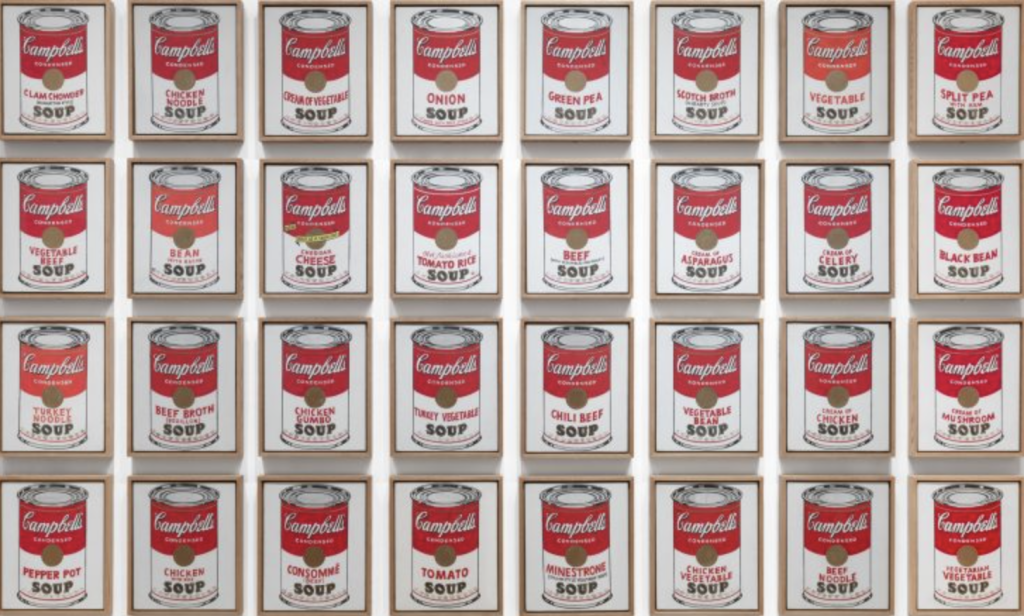
Andy Warhol, Campbell’s Soup Can (Tomato) (1962). By treating a supermarket staple as a worthy subject for art, Warhol posed an unanswerable question about the gatekeepers of culture.
The Street as Gallery: Banksy and the Art of Trespass
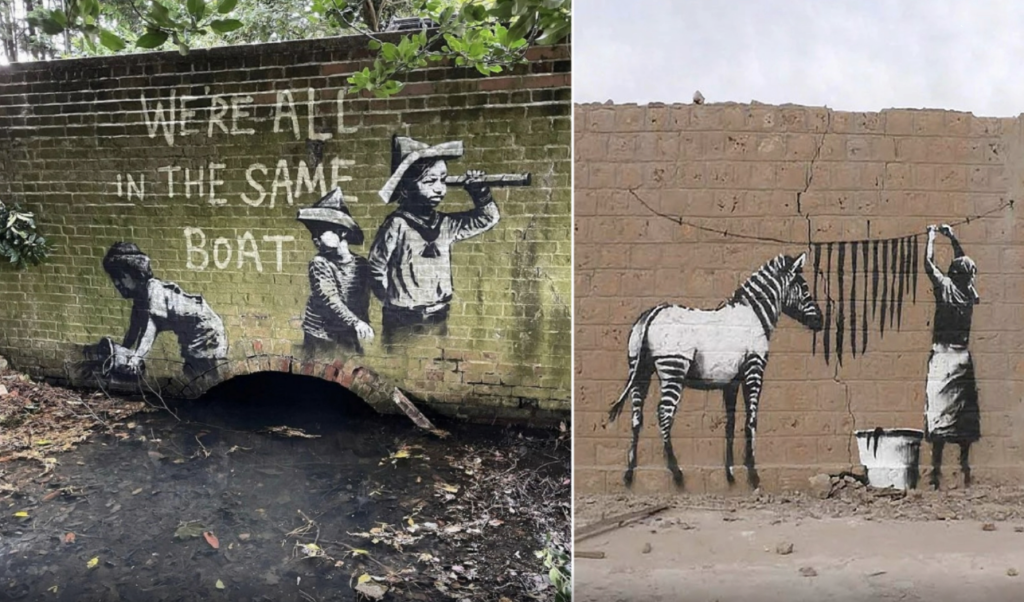
The most visible democratic artist of our own era operates without a name on a gallery wall, without auction-house credentials, and without permission. Banksy — identity still officially unknown — has spent three decades using city walls as canvases and satire as his medium. His works appear overnight on the sides of buildings in London, Bethlehem, Detroit, and Gaza, available to anyone who happens to walk past.
The democratic gesture here is complete: there is no admission price, no opening night, no velvet rope. The audience is whoever is there. This is not incidental to the work — it is the work. When Banksy painted Girl with Balloon on a wall in Shoreditch in 2002, it was seen by thousands of people who had no particular interest in contemporary art. The image spoke to them anyway.
Banksy’s relationship to the art market is deliberately contradictory. His pieces command millions at auction — yet he has consistently undermined that valuation. In 2018, the moment a Sotheby’s hammer fell on a framed version of Girl with Balloon, the painting partially shredded itself via a hidden mechanism in the frame. The newly titled Love is in the Bin subsequently sold for even more. The prank was also a philosophical argument: the market cannot truly own democratic art, because democratic art, at its core, belongs to everyone.
What Democratic Art Demands of Us
To believe in democratic art is to take a position on some of the hardest questions in aesthetics. It is to insist that beauty is not the exclusive possession of the educated; that meaning does not require initiation into a code; that the experience of a child looking at a mural on her school wall is not less valid than a collector standing before a canvas in a climate-controlled room. It does not mean that all art is equally accomplished or that skill does not matter. Rivera’s mastery of the fresco technique was formidable. Kollwitz’s command of printmaking was unsurpassed. Warhol’s visual intelligence was precise and ruthless. Democratic art does not demand that we lower the bar. It demands that we widen the door.
And in a cultural moment when algorithms determine what billions of people see and when AI can generate images in seconds, the philosophy of democratic art becomes more urgent than ever. The question is no longer only “who gets to make art” but “who controls the means of visual expression, and for whose benefit?” The walls Rivera painted have not been torn down. But new walls invisible, algorithmic and commercial have risen in their place. The democratic artist, in whatever century, is the one who finds a way to bypass those obstacles.